


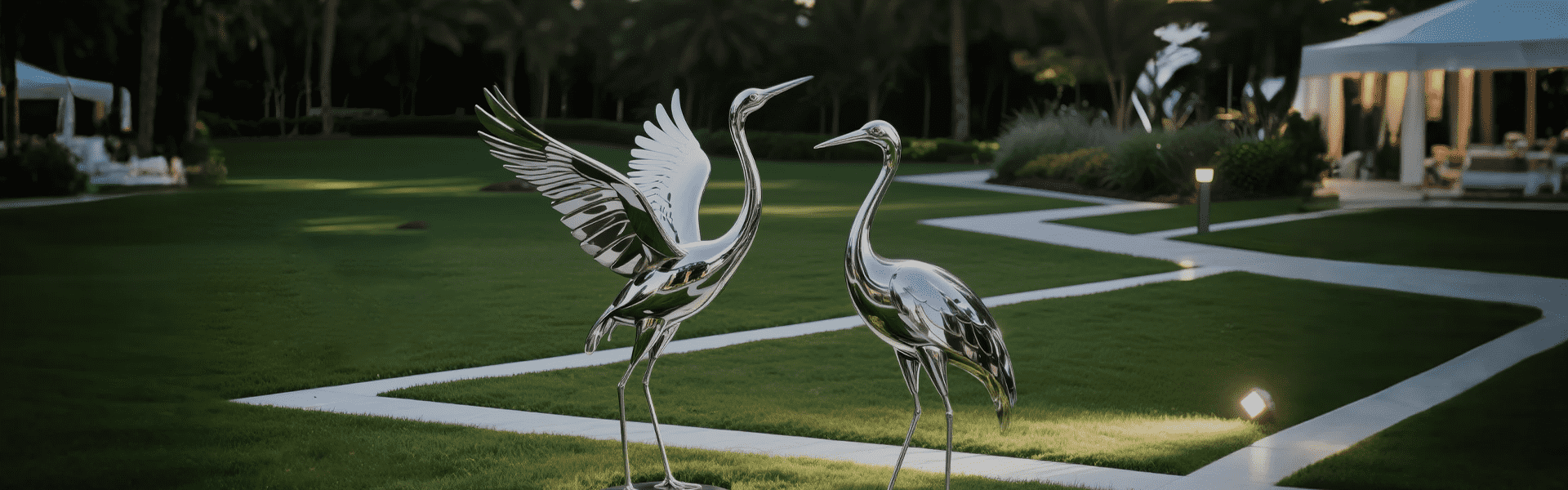
The reason fiberglass sculptures are a preferred material for painting lies in the unique properties of the material and its high compatibility with painting techniques. It not only allows for perfect color adhesion and rich effects but also ensures long-lasting color stability. Simultaneously, it offers flexibility in craftsmanship and cost advantages, allowing for unrestrained artistic expression through color.
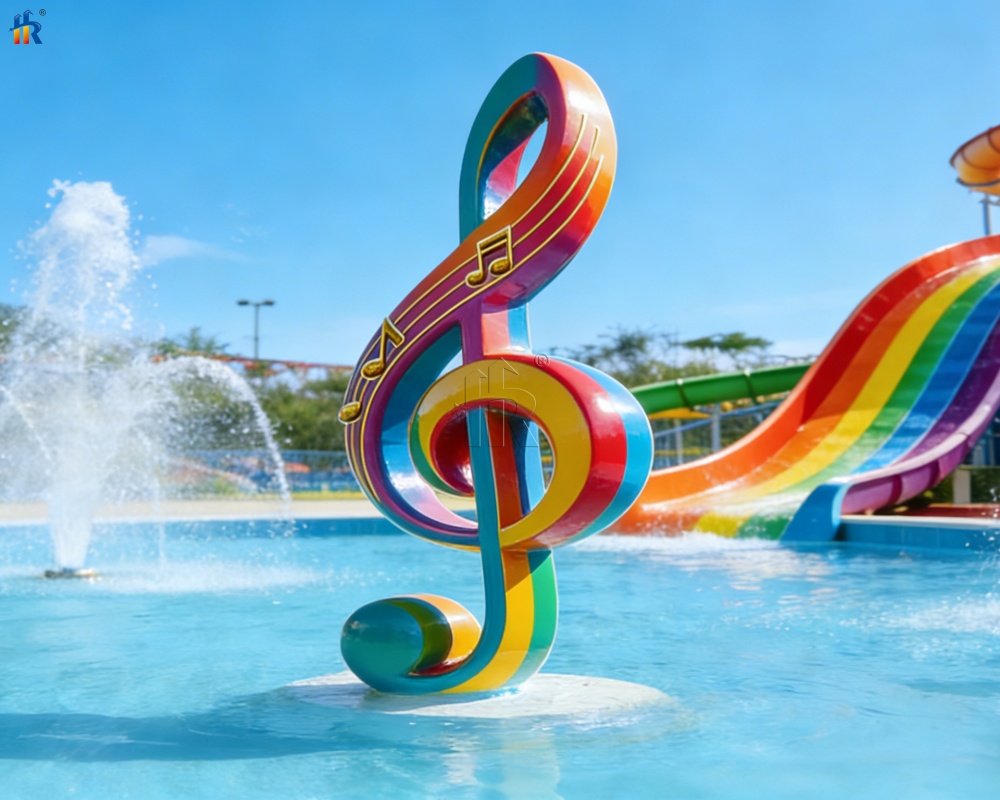 The colorful fiberglass sculptures are dazzling when placed outdoors
The superior surface characteristics of fiberglass provide a solid foundation for painting, which is the primary reason it is suitable for this purpose. Unlike the rough and porous surface of stone or the smooth and slippery surface of metal, fiberglass, after polishing, forms a delicate and smooth surface. It avoids uneven pigment accumulation due to excessive roughness and prevents difficulty in color layer adhesion due to excessive smoothness. This ideal surface texture allows the paint to spread evenly and adhere firmly to the base.
Whether it's the transparency of a thin coat or the richness of a thick coat, both can be accurately presented. At the same time, fiberglass itself has a certain degree of porosity compatibility. After simple pre-treatment, the paint can penetrate into the tiny pores of the surface, forming a strong bond. This prevents problems such as paint peeling and flaking, providing a fundamental guarantee for high-quality painting results.
The excellent compatibility of fiberglass with pigments allows for superior color rendering, which is a key reason for its suitability for painting. Fiberglass uses synthetic resin as its base material, and this material itself has good chemical compatibility. It can perfectly blend with various mainstream pigments such as acrylics, epoxy paints, and water-based coatings without chemical reactions that would cause color deterioration. Whether it's bright and vibrant high-saturation colors or soft and elegant low-saturation colors, whether it's the cold, hard luster of imitation metal or the natural texture of imitation stone, all can be accurately reproduced through the fusion of pigments and fiberglass. For example, in cartoon and anime sculpture creation, fiberglass can perfectly carry the vibrant colors of Luffy's iconic red vest and blue shorts, instantly bringing the character to life. In imitation bronze sculpture creation, it can also present the rustic and heavy texture of bronze patina through pigment fusion, meeting different artistic expression needs.
 The craftsman is painting the fiberglass sculpture
Fiberglass sculptures boast excellent color durability, a significant advantage that makes them ideal for coloring. Fiberglass itself possesses superior weather resistance, capable of withstanding wind, sun, acid and alkali corrosion, and temperature fluctuations. This characteristic also provides excellent protection for the color layer. Combined with specialized environmentally friendly pigments and UV-resistant coatings, fiberglass sculptures, even when exposed to outdoor environments for extended periods, can effectively resist UV radiation, preventing color fading and yellowing. Tests show that high-quality colored fiberglass sculptures can maintain their color without significant changes for 5-8 years in normal outdoor environments, far exceeding the color durability of materials such as stone and ordinary plastics. At the same time, the corrosion resistance of fiberglass prevents moisture and salt spray from corroding the color layer, allowing the sculpture to maintain its vibrant colors.
The flexible and diverse process adaptability of fiberglass sculptures allows for greater freedom in coloring, which is another core reason why it is suitable for coloring. Fiberglass sculptures can be colored at multiple stages: before, during, and after molding, offering a wide range of process options. Before molding, colored gel coat can be sprayed into the mold, resulting in a finished product with the desired color directly after demolding, eliminating the need for subsequent coloring. After molding, large areas can be evenly colored using spray guns, or fine textures can be created through hand painting. Special effects can also be achieved through techniques such as decals and gradient spraying. This process flexibility not only meets the standardized needs of mass production but also adapts to the detailed requirements of personalized creations. Whether it's the overall color scheme of large urban landscape sculptures or the detailed color rendering of small trendy toy sculptures, it can be easily achieved.
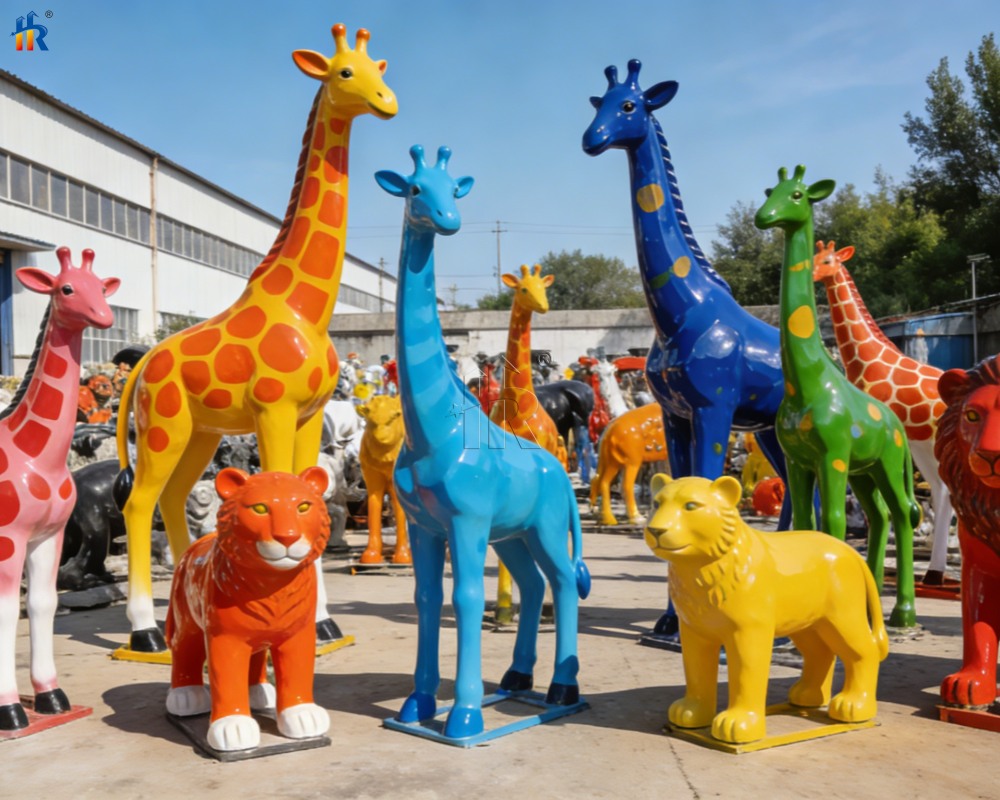 Fiberglass Sculpture Origin Factory in China——Ruiheng Company
It is these unique advantages of fiberglass sculptures that make them highly favored in various fields such as public art, commercial display, and animation and trendy toys. To perfectly realize the color creativity of fiberglass sculptures, choosing a professional creative team is crucial. Ruiheng Company has an experienced team of professional designers who can accurately grasp the essence of artistic creativity and color matching, transforming your ideas into sculptures that possess both beauty and quality.
As a source factory with over 10 years of experience, we specialize in the production and coloring processes of fiberglass sculptures. From material selection and mold making to coloring and shaping, we strictly control quality throughout the entire process. Whether it's large outdoor landscape sculptures, commercial IP character sculptures, or personalized custom-made pieces, we can complete them with precision. Choose Ruiheng, and let every fiberglass sculpture become a perfect fusion of color and art.
Please kindly leave your needs in detail. Our sales manager will contact you within 24 hours. And your contact information will be protected!
Please kindly leave your needs in detail. Our sales manager will contact you within 24 hours. And your contact information will be protected!


 +86 13418719769

 market@craftsornaments.com
 Newshang Smart Valley, Xilianhe Industrial Park, Fengtang Avenue, Shenzhen, Guangdong Province, China