


Why do bronze sculptures continue to appear in cities all over the world, even as new materials keep emerging?Walk through major urban spaces and you will often find bronze sculptures placed in parks, squares, campuses, and cultural districts. Some are newly installed, while others have stood for decades, gradually becoming part of the local identity.
This is not accidental. In public art planning, material choice determines not only visual effect but also how long a work can remain meaningful in its environment. Among all materials, bronze sculptures consistently stand out because they combine durability, artistic detail, and cultural continuity.
Public art is never just decoration. It carries memory, identity, and shared experience. Famous bronze sculptures worldwide include The Thinker from France, Donatello's David from Italy, and the ancient Dancing Girl of Mohenjo-daro from Pakistan. That is why the bronze sculpture is widely regarded as a timeless investment for public art—it connects physical longevity with long-term cultural expression.
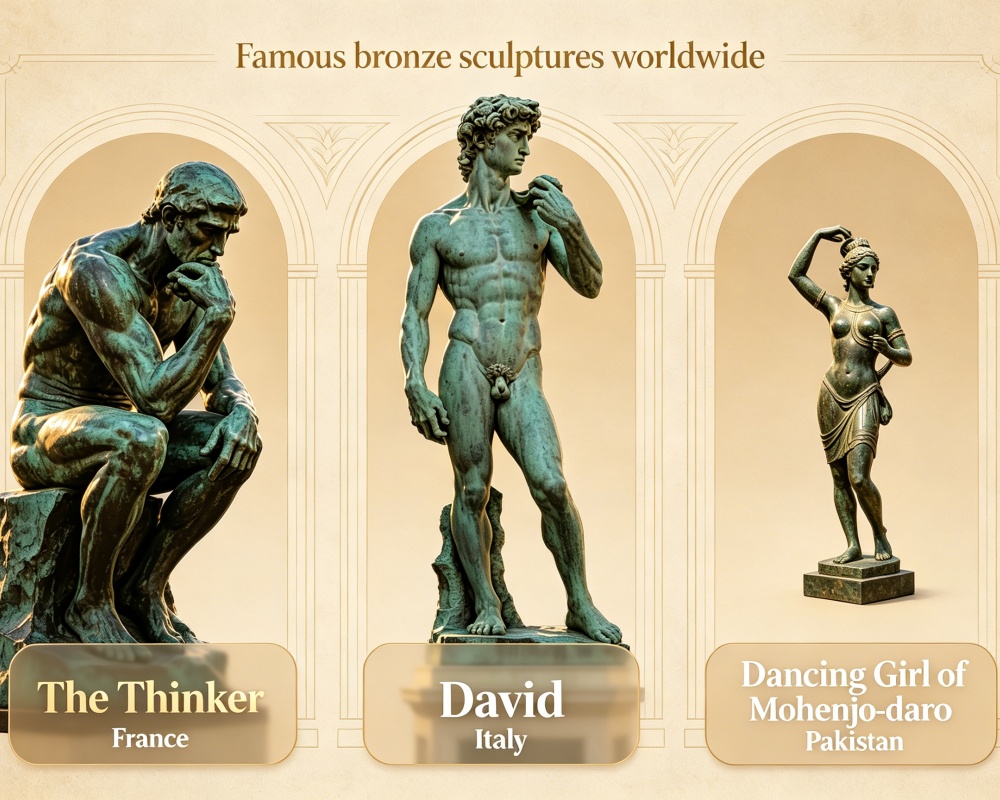 World-famous bronze sculptures
One of the most important advantages of bronze is its long service life. Bronze has been used in sculpture for thousands of years and remains highly stable in outdoor conditions.
It can resist rain, sunlight, wind, and temperature changes without losing structural integrity. With basic maintenance, a bronze sculpture can remain visually strong for decades or even longer.
Comparison of the lifespans of common sculpture materials:
| Material | Average Lifespan | Outdoor Stability |
| Bronze Sculpture | 50–100+ years | Very High |
| Fiberglass Sculpture | 10–20 years | Medium |
| Resin Sculpture | 5–15 years | Low |
| Steel Sculpture | 15–30 years | Medium |
This durability makes bronze especially suitable for public art projects that are intended to become long-term landmarks rather than temporary installations.
At the planning stage of public art, decisions are not only based on appearance, but also on how the artwork will perform over many years in real environments.
Material selection directly affects maintenance cycles, visual stability, and the long-term identity of a public space. Bronze is often chosen because it remains stable in all these aspects.
It can maintain a consistent visual character even as surrounding architecture or landscapes evolve. This stability is one of the key reasons it is widely used in civic and cultural projects where continuity matters.
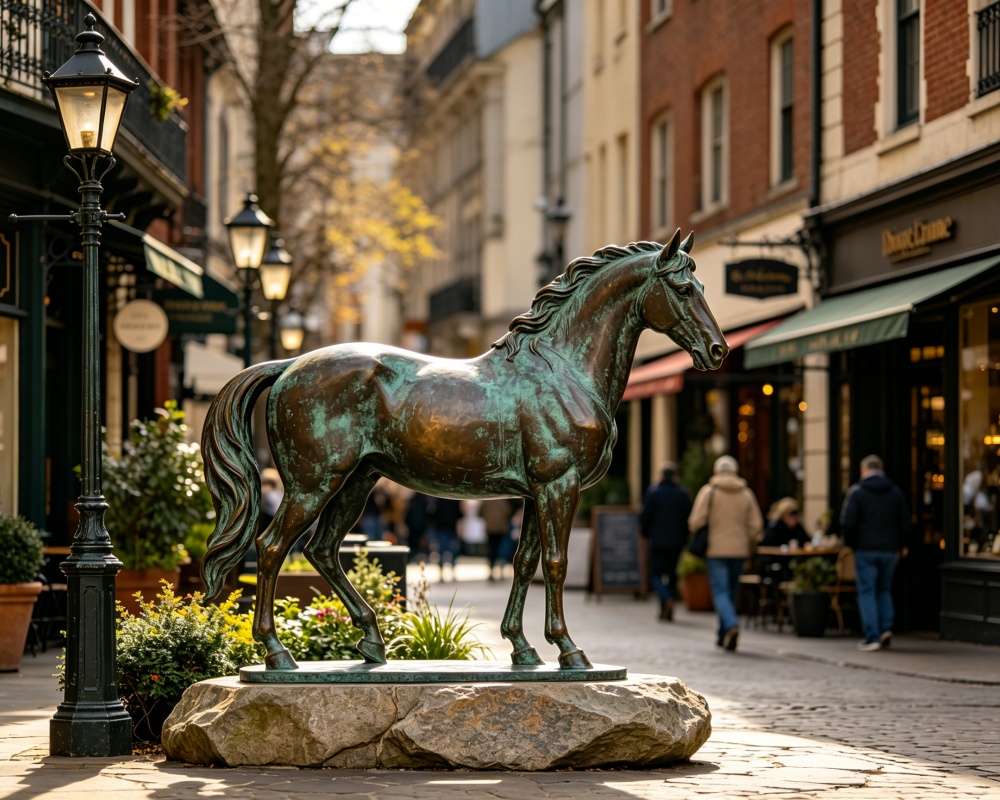 Bronze horse sculpture on the street
A bronze sculpture naturally has a strong presence in public environments. Its metallic surface, light reflection, and detailed craftsmanship create depth and texture that attract attention without overwhelming the space.
In plazas, parks, campuses, and commercial districts, it often becomes a focal point that encourages interaction, photography, and public engagement.
Over time, many bronze sculptures also evolve into visual landmarks that help define how people perceive a location.
Although bronze sculptures usually require higher initial investment, their real value becomes clearer when evaluated over the full lifecycle of a public project.
Public art is not purchased for months or years—it is designed to exist for decades. Over time, the differences between materials become more obvious in maintenance, stability, and overall performance.
Comparison between bronze sculptures&alternative materials:
| Evaluation Factor | Bronze Sculpture | Alternative Materials |
| Long-Term Durability | Excellent | Medium to Low |
| Maintenance Frequency | Low | High |
| Visual Stability Over Time | Strong | Often fades or deforms |
| Replacement Risk | Very Low | Higher over time |
| Lifecycle Cost Efficiency | High | Medium to Low |
From a long-term investment perspective, bronze often delivers stronger overall value because it reduces replacement cycles and maintains consistent visual and cultural performance.
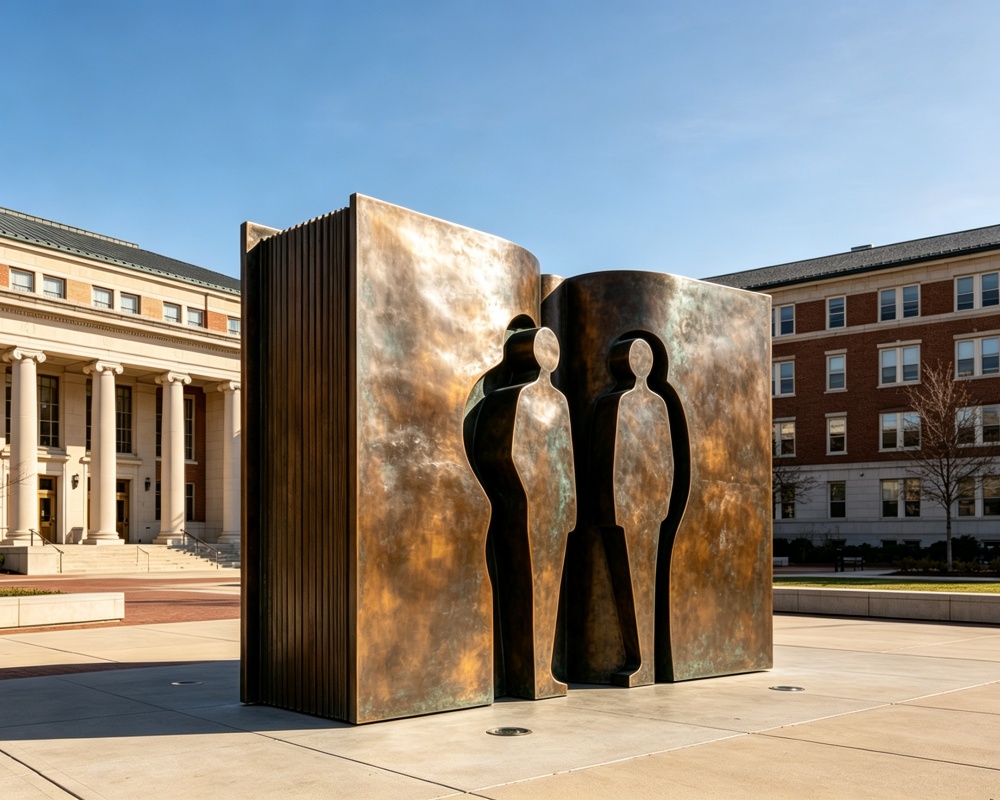 Bronze sculpture as a campus landmark
Every public space has its own design language, cultural background, and functional needs.
A custom bronze sculpture allows full flexibility in concept and execution, including:
1.Cultural and historical monuments
2.Abstract contemporary installations
3.Animal and nature-themed works
4.Civic identity symbols
5.Large-scale landmark sculptures
Bronze casting technology also allows for fine detailing while maintaining structural strength, making it suitable for both artistic expression and engineering requirements.
Across cities and cultural projects worldwide, bronze continues to be chosen because it meets the core expectations of public art: durability, meaning, and visual presence.
It does not only occupy space—it helps define it over time. This combination of permanence and expression is what keeps bronze at the center of long-term public art planning.
When public art is designed for decades rather than short-term display, material selection becomes a strategic decision. Bronze remains one of the few materials that consistently balances durability, detail, and cultural meaning in a single solution.
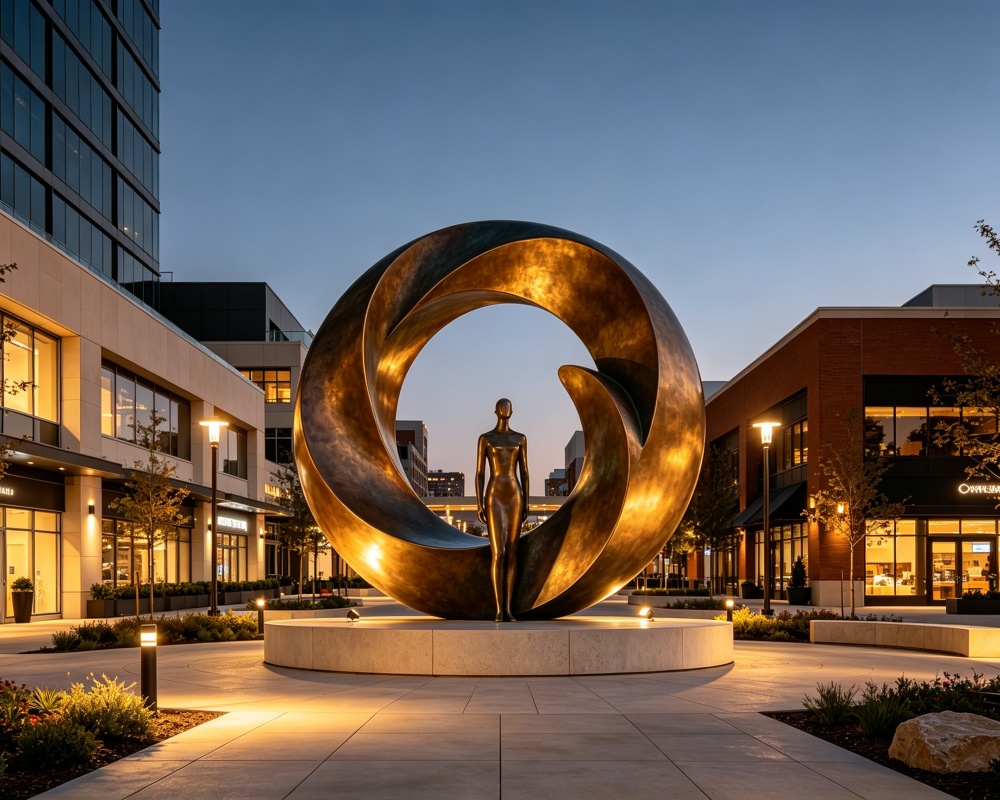 Large-scale custom bronze sculptures for real estate developments
For projects requiring custom bronze sculptures, Ruiheng Sculpture Factory provides complete support from concept design to production and installation. With extensive experience in large-scale public art projects, we combine traditional bronze casting craftsmanship with modern manufacturing techniques to ensure each piece achieves both artistic precision and long-term structural stability.
From urban environments to cultural landmarks and commercial developments, we focus on turning design ideas into lasting bronze sculptures that become an integral part of public space over time.
Please kindly leave your needs in detail. Our sales manager will contact you within 24 hours. And your contact information will be protected!
Please kindly leave your needs in detail. Our sales manager will contact you within 24 hours. And your contact information will be protected!


 +86 13418719769

 market@craftsornaments.com
 Newshang Smart Valley, Xilianhe Industrial Park, Fengtang Avenue, Shenzhen, Guangdong Province, China