


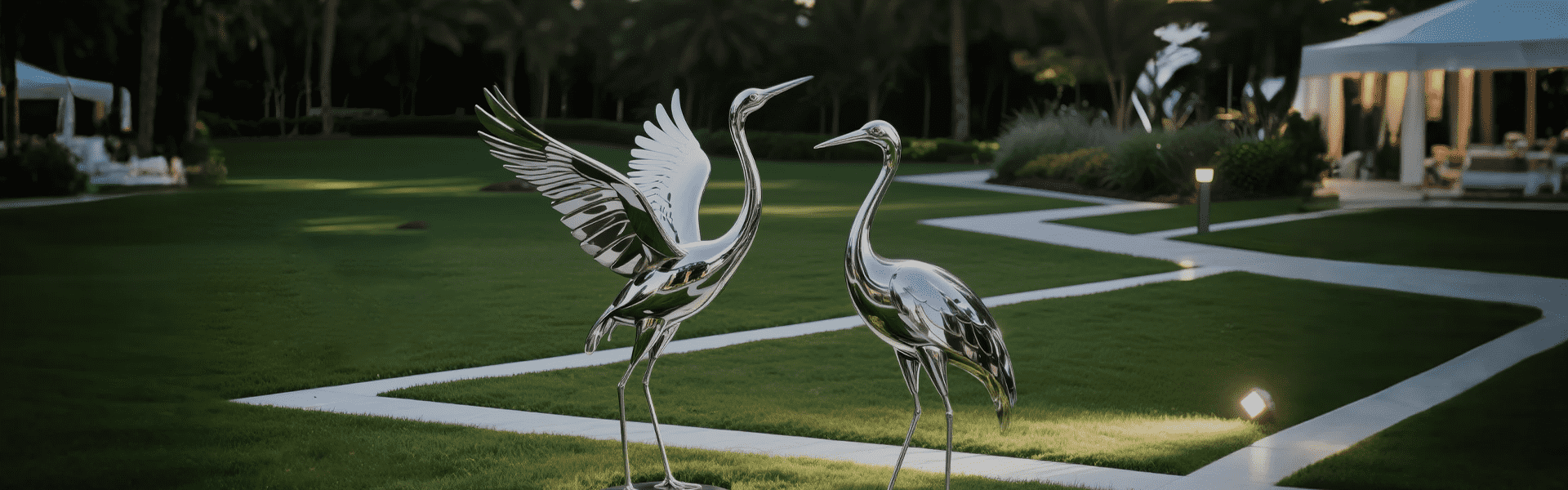
In many outdoor projects, sculptures are often categorized together. However, in practical application, decorative sculptures and landmark sculptures serve distinctly different purposes. Confusing the two can lead to design inconsistencies, wasted budget, and even poor spatial effects. For clients with outdoor sculpture project needs, clearly understanding the distinction between decorative and landmark sculptures is crucial.
The core difference between Decorative Sculptures and Landmark Sculptures lies in intent. Decorative sculptures are designed to complement a space. They enhance atmosphere, soften architecture, and provide visual rhythm without demanding attention. These sculptures often blend naturally into gardens, walkways, hotel courtyards, or interior-exterior transition areas.
Landmark sculptures, on the other hand, are created to be noticed. They are visual anchors meant to define a location, acting as reference points for visitors. In many cases, landmark sculptures become inseparable from the identity of the site itself. People remember the place because they remember the sculpture.
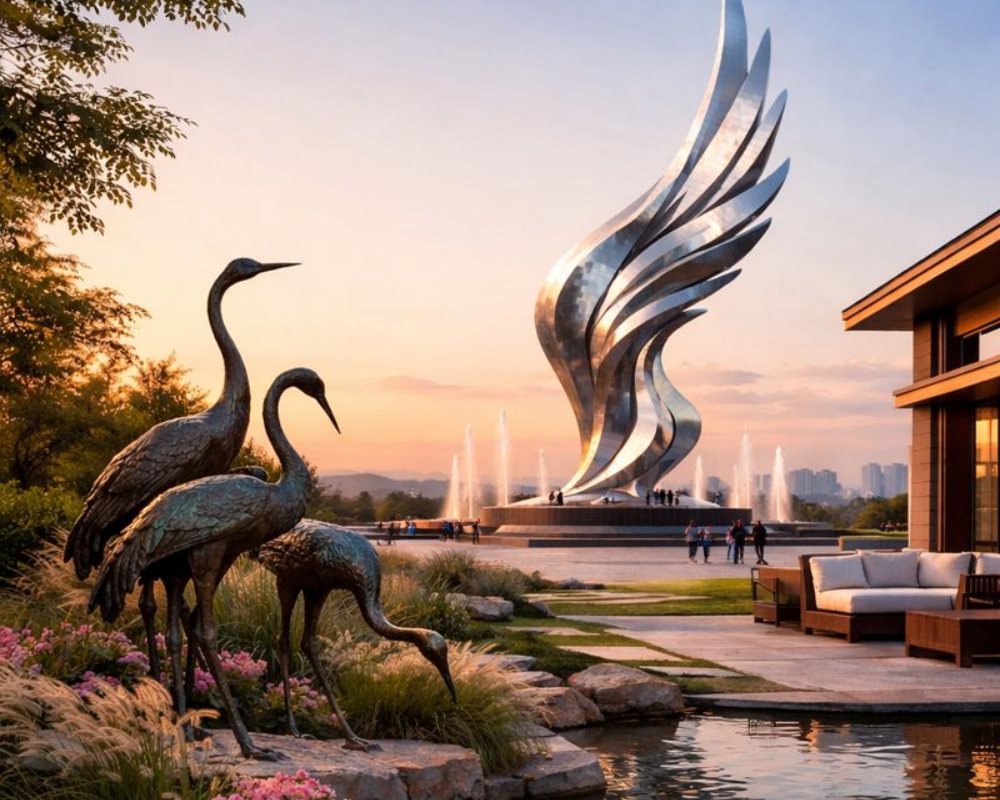 Decorative sculptures and landmark sculptures
Scale is another clear dividing line between Decorative Sculptures and Landmark Sculptures. Decorative sculptures tend to work at a human scale. They invite closer viewing and interaction, often encouraging visitors to walk past, pause briefly, and continue moving through the space.
Landmark sculptures operate on a different visual level. Their size is calculated to be readable from a distance, sometimes across open plazas or wide roads. Proportion is critical here. A landmark sculpture that is too small loses authority, while one that is oversized without intention can overwhelm its surroundings.
Decorative sculptures usually follow architecture rather than challenge it. Their forms, colors, and placement are chosen to support the existing design language. In many commercial projects, decorative sculptures are intentionally understated, allowing buildings, landscaping, and lighting to remain the main focus.
Landmark sculptures often do the opposite. They create a dialogue with architecture, sometimes even becoming the visual focal point around which the surrounding environment is organized. In these cases, architecture frames the sculpture, not the other way around. This is one of the most important practical differences between Decorative Sculptures and Landmark Sculptures during planning.
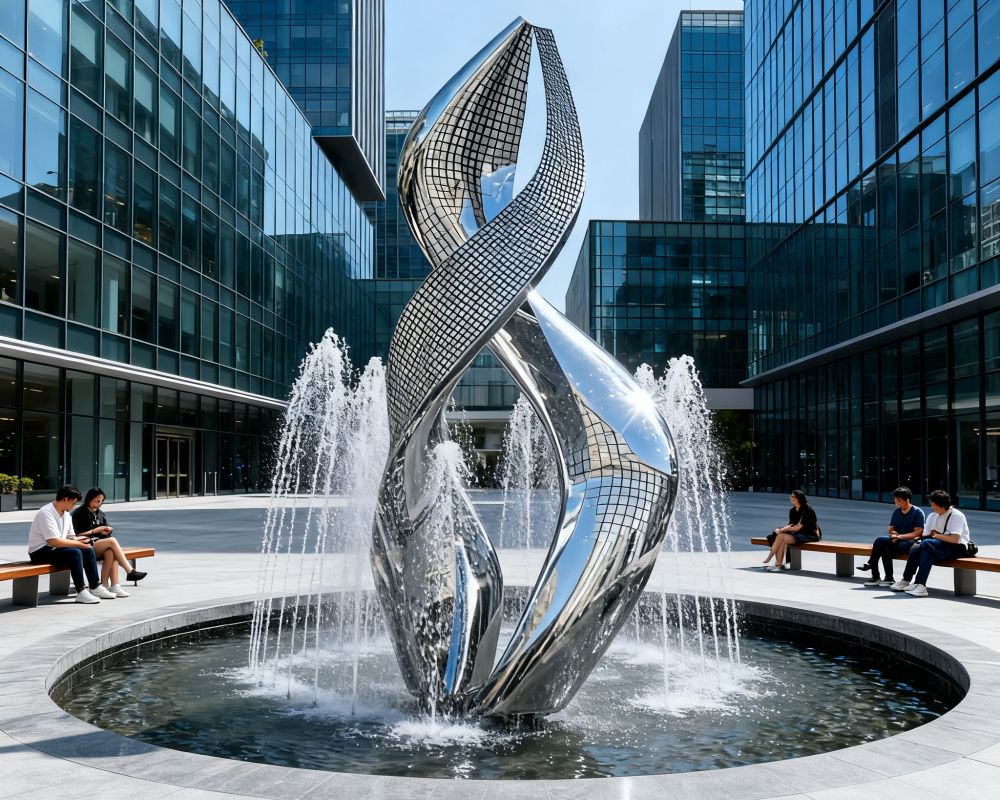 Decorative stainless steel sculptures
From a functional perspective, decorative sculptures are expected to be durable, visually pleasing, and easy to integrate. Maintenance considerations are usually straightforward, and replacement or relocation is relatively simple.
Landmark sculptures carry heavier expectations. They must withstand constant exposure, frequent photography, and high public interaction. Structural design, internal support, and installation methods become central to the project. Once installed, landmark sculptures are rarely moved, making early planning essential.
While decorative sculptures are typically budget-friendly and flexible, landmark sculptures are investments. The value of landmark sculptures is not measured only by material cost, but by their ability to generate recognition, foot traffic, and long-term visual identity.
This is why the distinction between Decorative Sculptures and Landmark Sculptures matters financially. Treating a landmark sculpture like a decorative element often results in underdesign. Treating a decorative sculpture like a landmark can lead to unnecessary complexity.
The decision between decorative and landmark sculptures should always start with one question: what role should this sculpture play in the space? When the answer is clarity, balance, and atmosphere, decorative sculptures are often the right choice. When the goal is memorability, orientation, and symbolic value, landmark sculptures become essential.
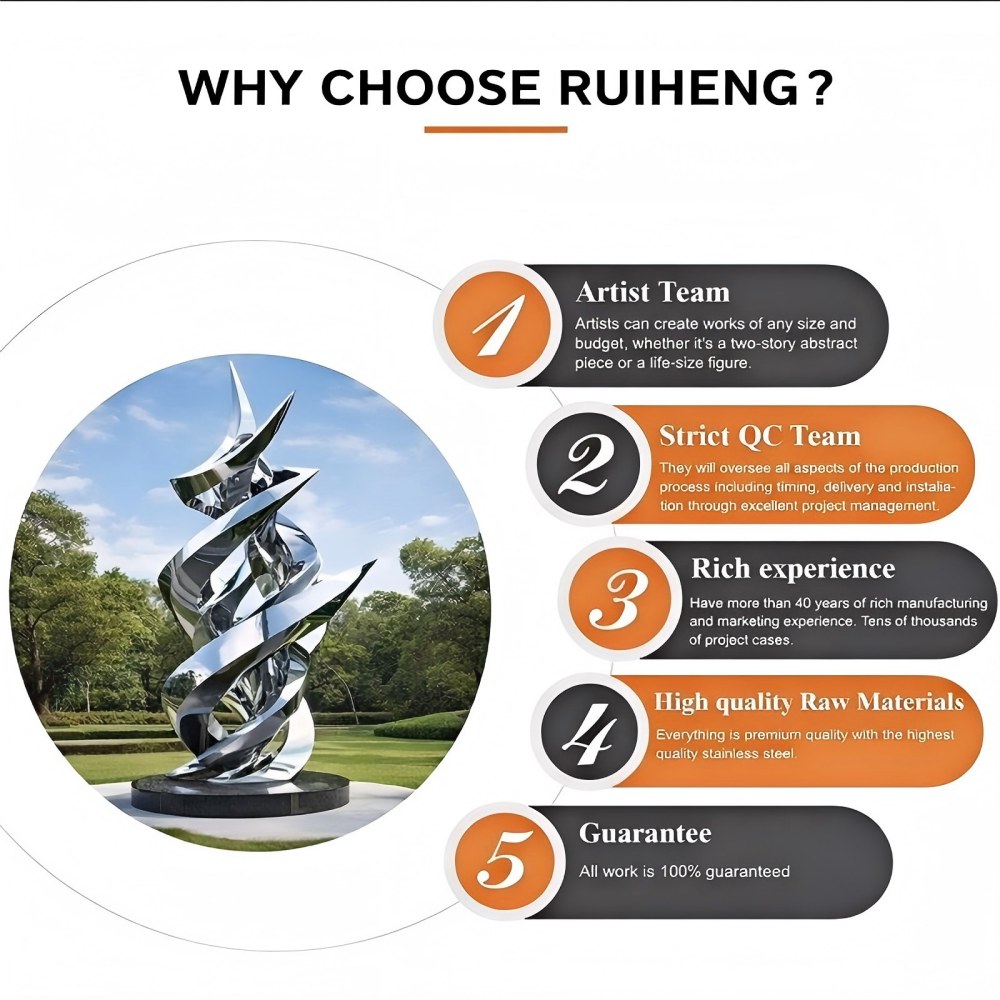 Why choose us?
In practice, many successful projects use both. Decorative sculptures guide visitors through the space, while a landmark sculpture defines the destination. Understanding how Decorative Sculptures and Landmark Sculptures work together allows designers to create layered, meaningful environments rather than isolated visual elements.
Ruiheng Crafts Co., Ltd. has over 20 years of design and manufacturing experience, specializing in helping clients transform creative ideas into lifelike sculptures.With a 10,000+ square meter factory and full custom capabilities, Ruiheng supports projects ranging from subtle decorative sculptures to large-scale landmark installations. If you are planning a sculpture project and want to choose the right direction from the start, you are welcome to contact Ruiheng to customize your ideal sculpture solution.
Please kindly leave your needs in detail. Our sales manager will contact you within 24 hours. And your contact information will be protected!
Please kindly leave your needs in detail. Our sales manager will contact you within 24 hours. And your contact information will be protected!


 +86 13418719769

 market@craftsornaments.com
 Newshang Smart Valley, Xilianhe Industrial Park, Fengtang Avenue, Shenzhen, Guangdong Province, China