


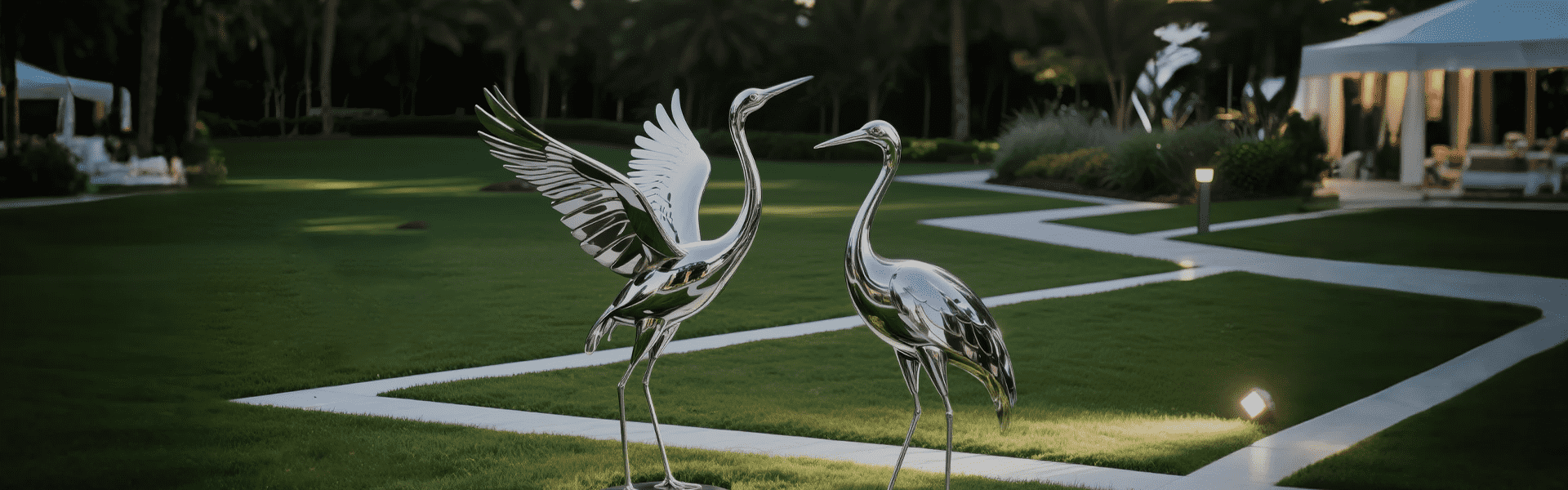
A custom fiberglass sculpture may look simple once it is finished, but the production process behind it can take much longer than expected. For buyers working with a fixed opening date, exhibition schedule, or installation deadline, knowing the mold-making time early can make the entire project much easier to plan.
As a source fiberglass sculpture factory, Ruiheng often works with customers who provide their own 3D designs or need a sculpture developed from an original concept. In most standard projects, fiberglass sculpture mold making takes around 5–15 working days after the 3D design is confirmed. Large, highly detailed, or multi-section sculptures may require more time.
The mold is only one part of the schedule. The time required for 3D modeling, model preparation, mold making, fiberglass production, surface finishing, and final inspection should also be considered.
The exact schedule depends on the design and production requirements, but a typical custom fiberglass sculpture project can be divided into several stages.
| Production Stage | Typical Time | Main Factors |
| 3D design confirmation | 1–3 working days | Design complexity and revisions |
| Model preparation | 2–5 working days | Size, shape, and sectioning |
| Mold making | 5–15 working days | Mold structure and surface details |
| Fiberglass production | 3–10 working days | Size, quantity, and reinforcement |
| Finishing and painting | 3–7 working days | Color, texture, and surface requirements |
These time ranges are general references rather than fixed production promises. A small decorative fiberglass sculpture may move through the process much faster, while a 3–5 meter custom sculpture with complex details can take considerably longer.
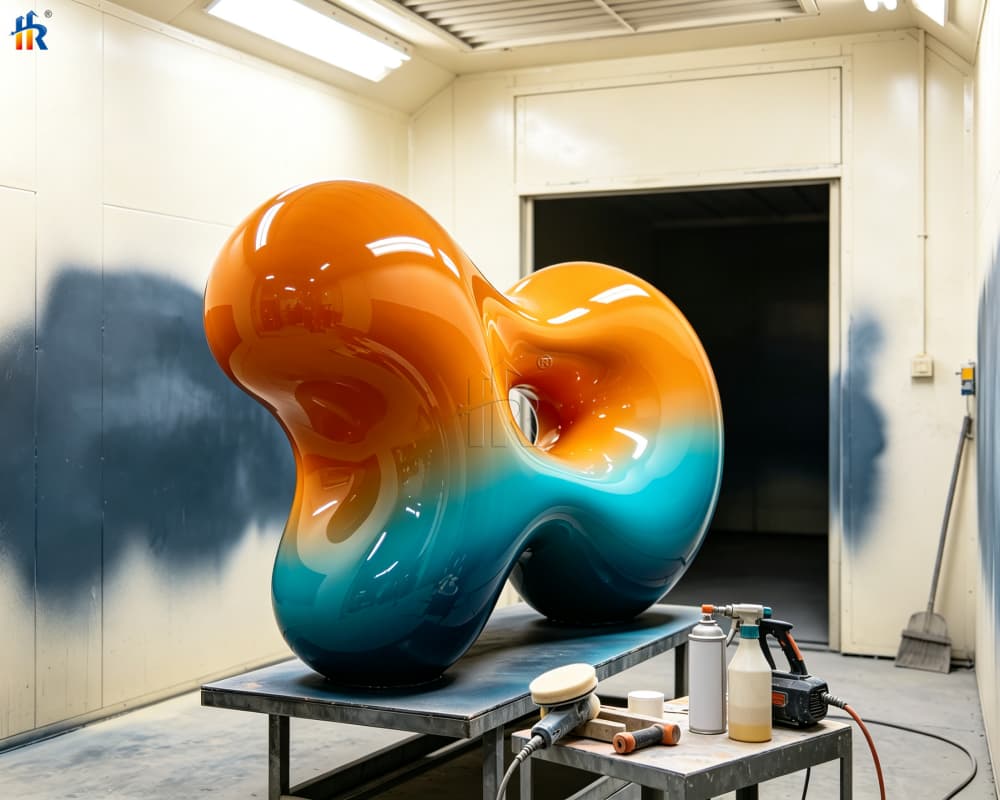 Semi-finished fiberglass sculpture
The most important factor is usually the shape of the sculpture, not simply its size.
A simple geometric fiberglass sculpture may require a relatively straightforward mold. A life-size animal, mascot, character, or realistic figure can be much more complicated because of its curves, recessed areas, fine details, and irregular surfaces.
The 3D model also needs to be suitable for mold production. A design that looks correct on screen may still need adjustments before manufacturing. The manufacturer has to determine where the mold should separate and how the finished fiberglass sculpture can be removed without damaging details.
For a large fiberglass sculpture, the mold may need to be divided into several sections. This takes additional preparation, but it also makes the finished sculpture easier to transport and assemble.
A clear and production-ready 3D design can save significant time.
If the customer has already confirmed the dimensions, proportions, surface details, and overall appearance, the manufacturer can move more directly into model preparation and mold making. Repeated changes after mold production begins are much more likely to extend the schedule.
For this reason, customers should confirm the following before the mold is started:
Overall height, width, and depth
3D model and important surface details
Required number of sections
Color and surface finish
Installation and transportation requirements
Final delivery deadline
For custom fiberglass sculpture projects, these details are often more important to the schedule than simply asking how many days the mold will take.
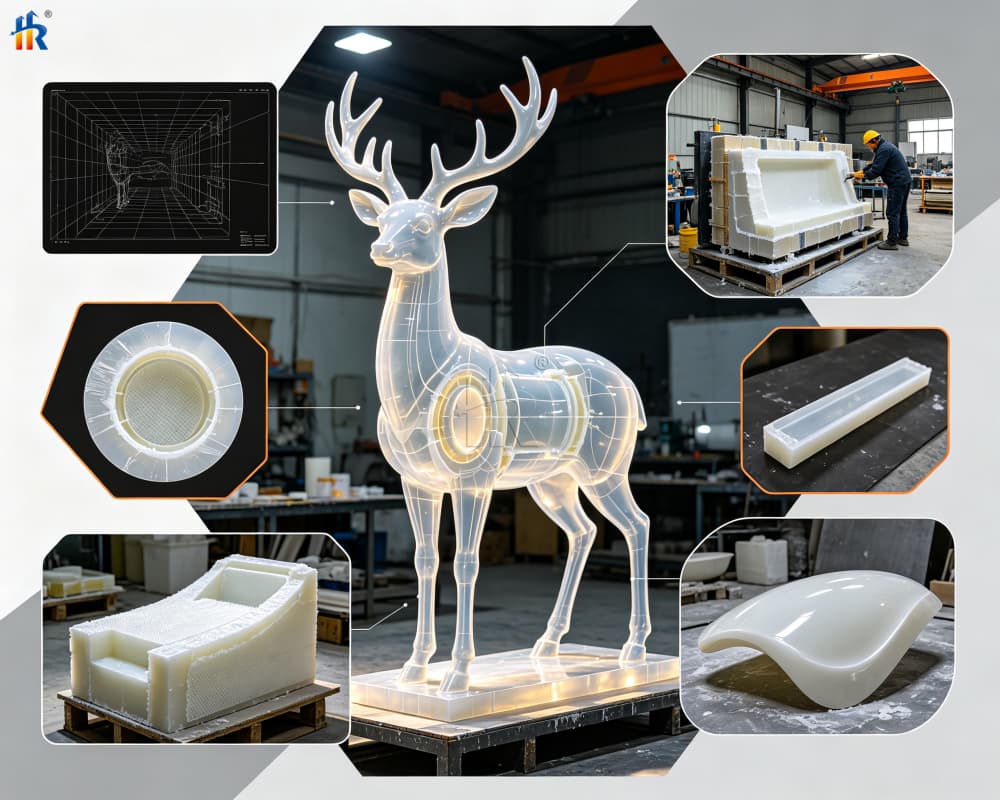 Fiberglass sculptures require 3D modeling by a designer
Mold-making is not just about copying a 3D shape. The manufacturer needs to understand how that shape will behave during actual fiberglass production.
At Ruiheng, our production team reviews the 3D design from a manufacturing perspective before making the mold. For complex fiberglass sculptures, we consider mold separation, sectional construction, structural reinforcement, transportation, and final assembly at an early stage.
This approach helps reduce unnecessary modifications during production. It is particularly useful when a customer needs a large fiberglass sculpture completed according to a specific installation date.
The quality of the original mold also affects the next stages. A well-prepared mold can reproduce the intended shape and surface details more consistently, reducing the amount of correction required during fiberglass production and finishing.
If the project has a tight deadline, the best way to save time is usually to reduce unnecessary changes rather than simply asking the factory to work faster.
A practical schedule is easier to achieve when the 3D design, dimensions, materials, surface finish, quantity, and delivery requirements are confirmed before mold production begins.
For a simple fiberglass sculpture, mold making may take only several working days. For a large custom sculpture with complex geometry and multiple mold sections, allowing two to three weeks for mold preparation is more realistic.
It is also important to remember that mold completion does not mean the finished sculpture is ready for shipment. Fiberglass layup, reinforcement, demolding, trimming, surface treatment, painting, assembly, quality inspection, and packaging still require additional time.
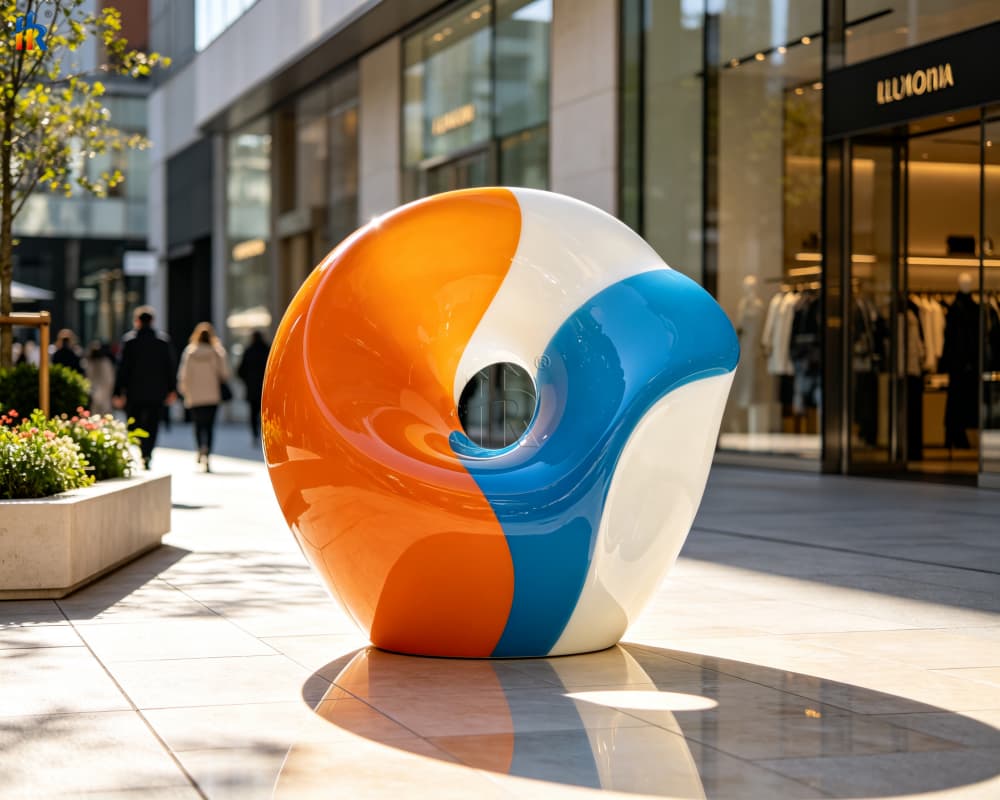 The completed fiberglass sculpture is displayed on the street
The mold-making time for a custom fiberglass sculpture is usually around 5–15 working days, but the complete production schedule depends on the 3D design, sculpture size, surface complexity, mold structure, quantity, finishing requirements, and delivery arrangements.
For customers with a specific installation or event deadline, it is better to evaluate the entire production timeline rather than looking at mold making alone. Confirming the 3D design and production details early can also prevent unnecessary revisions and keep the fiberglass sculpture project on schedule.
If you already have a 3D design or are still developing the concept, Ruiheng welcomes your inquiry. We can review the design, discuss the mold-making requirements and estimated production time, and help you plan the fiberglass sculpture project according to its size, application, and delivery schedule.
1.How long does it take to make a fiberglass sculpture from a 3D model?
For a standard project, the mold-making stage is commonly around 5–15 working days after the 3D design is approved. The complete production schedule is longer because fiberglass fabrication, finishing, inspection, and packaging must also be completed.
2.Can a manufacturer shorten the mold-making time for an urgent project?
Sometimes. A production-ready 3D file, confirmed dimensions, simple mold structure, and quick approval of design details can help reduce unnecessary delays. The achievable schedule still depends on the sculpture's complexity and size.
3.Does every custom fiberglass sculpture need a new mold?
For a new custom shape, a dedicated mold is normally required. If the same design is produced repeatedly, the existing mold may be reused depending on its condition and construction.
4.Can Ruiheng help develop the 3D design before making the fiberglass sculpture?
Yes. Ruiheng can work with customers from the 3D design stage and review the design for practical fiberglass production, including dimensions, mold separation, sectional construction, and installation requirements.
5.What should I tell a fiberglass sculpture factory if I have a strict deadline?
Provide the 3D design, final dimensions, quantity, installation location, required finish, shipping destination, and target delivery date as early as possible. This allows the factory to evaluate the complete production schedule instead of estimating only the mold-making stage.
Please kindly leave your needs in detail. Our sales manager will contact you within 24 hours. And your contact information will be protected!
Please kindly leave your needs in detail. Our sales manager will contact you within 24 hours. And your contact information will be protected!


 +86 13418719769

 market@craftsornaments.com
 Newshang Smart Valley, Xilianhe Industrial Park, Fengtang Avenue, Shenzhen, Guangdong Province, China