


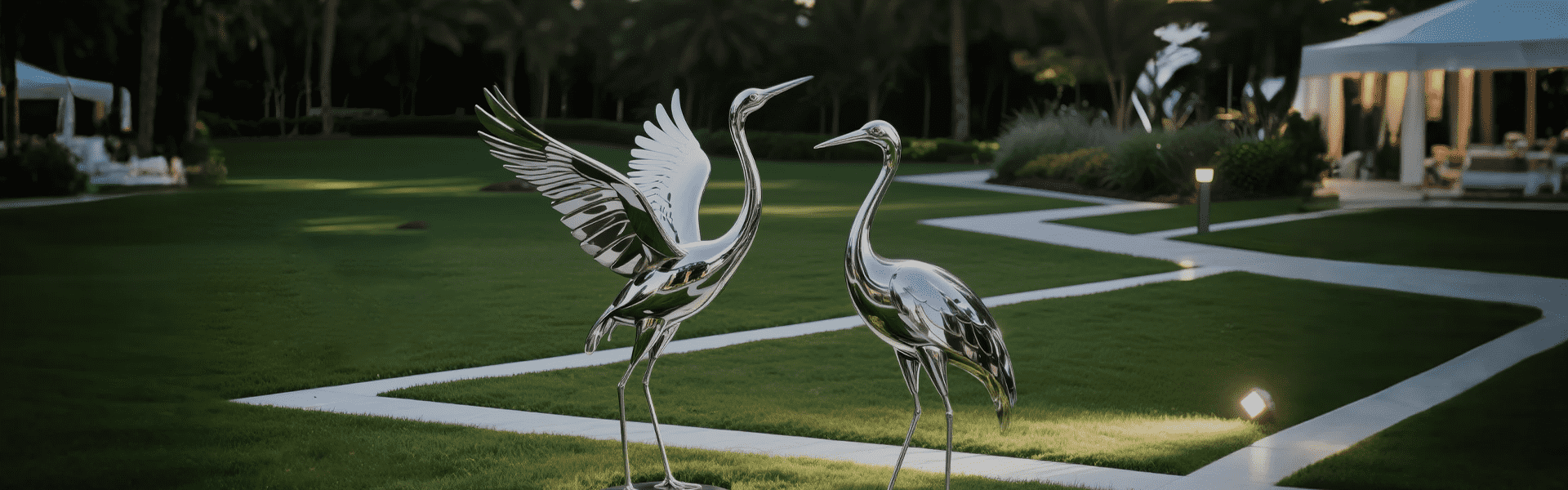
As a form of solidified art, sculptures can inject a unique cultural depth and aesthetic style into a home space, transforming an ordinary residence into an elegant artistic haven. However, simply purchasing a sculpture and placing it randomly in your home will not necessarily showcase its value. The correct placement method maximizes the artistic beauty of the sculpture while also considering home safety and spatial harmony. This avoids disrupting the overall home atmosphere or even creating safety hazards due to improper placement. Therefore, mastering the considerations for placing sculptures at home is key to perfectly integrating art and life.
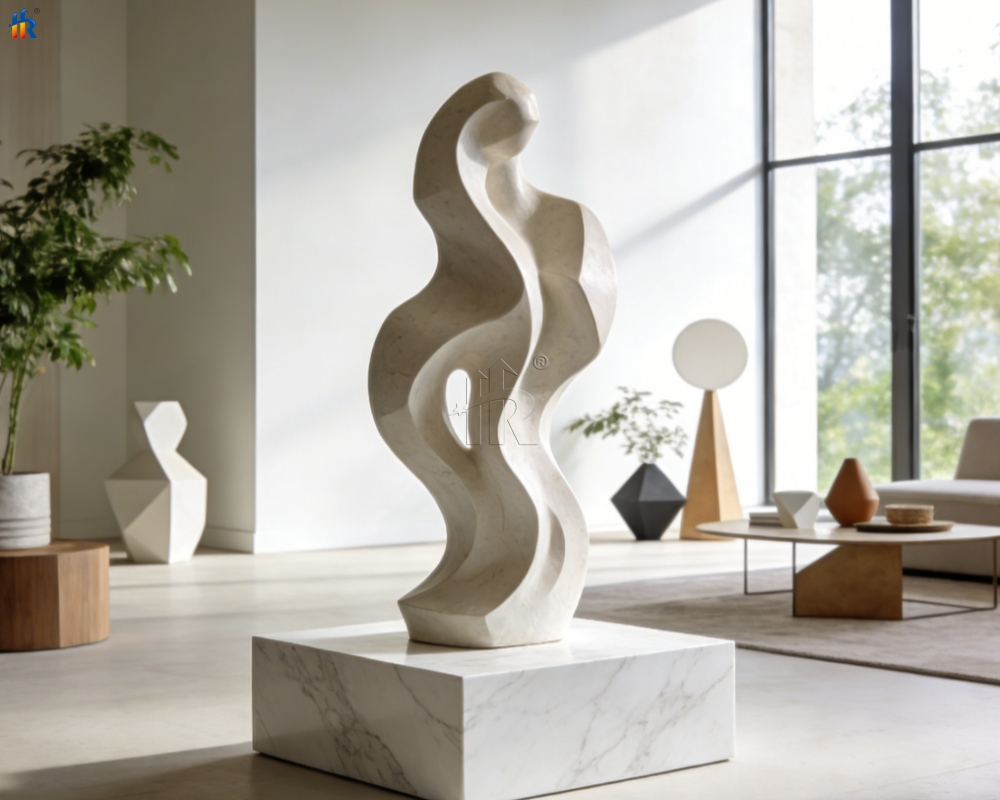 Beautiful sculptures placed in the home enhance the atmosphere
Choosing the appropriate size is a fundamental prerequisite for placing sculptures. The size of the sculpture should be compatible with the area, ceiling height, and proportions of the surrounding furniture in the placement space. If the size is unbalanced, it will appear awkward and out of place. For cozy and compact spaces such as bedrooms and studies, small sculptures with a height of 8-24 inches are suitable. Exquisite marble or small resin figurines can be placed on bookshelves, bedside tables, or desks. They serve as accents to add detailed beauty without occupying too much living space. For open areas such as living rooms and entryways, medium-sized or even larger sculptures of 3-4 feet can be used. Floor-standing human figures or abstract sculptures with strong visual impact can become the focal point of the space, enhancing the overall ambiance. It is recommended to measure the space dimensions with a tape measure before placement and mark the placement area of the sculpture. Alternatively, use objects of similar size to simulate the placement to visually determine if the size is appropriate.
Scientifically planning the placement location requires considering both aesthetic effect and practical safety. From a spatial layout perspective, sculptures should be placed in a location with an open view and suitable lighting. For example, on either side of the living room or entryway, or at the end of a corridor, this allows for easy viewing and uses light to highlight the details and texture of the sculpture. From a lifestyle perspective, several taboos should be avoided. Sculptures in the entryway should not face the main door. Avoid placing sculptures with sharp edges near the head of the bed in the bedroom, as this may affect sleep. Sculptures should not be placed in areas with poor air quality or high humidity, such as bathrooms and kitchens, to prevent material damage or disruption of the spatial atmosphere. Large sculptures should be placed on a flat and stable surface, ideally with a solid wall behind them for support. Avoid placing them in areas with frequent foot traffic, such as hallways, to prevent collisions and tipping.
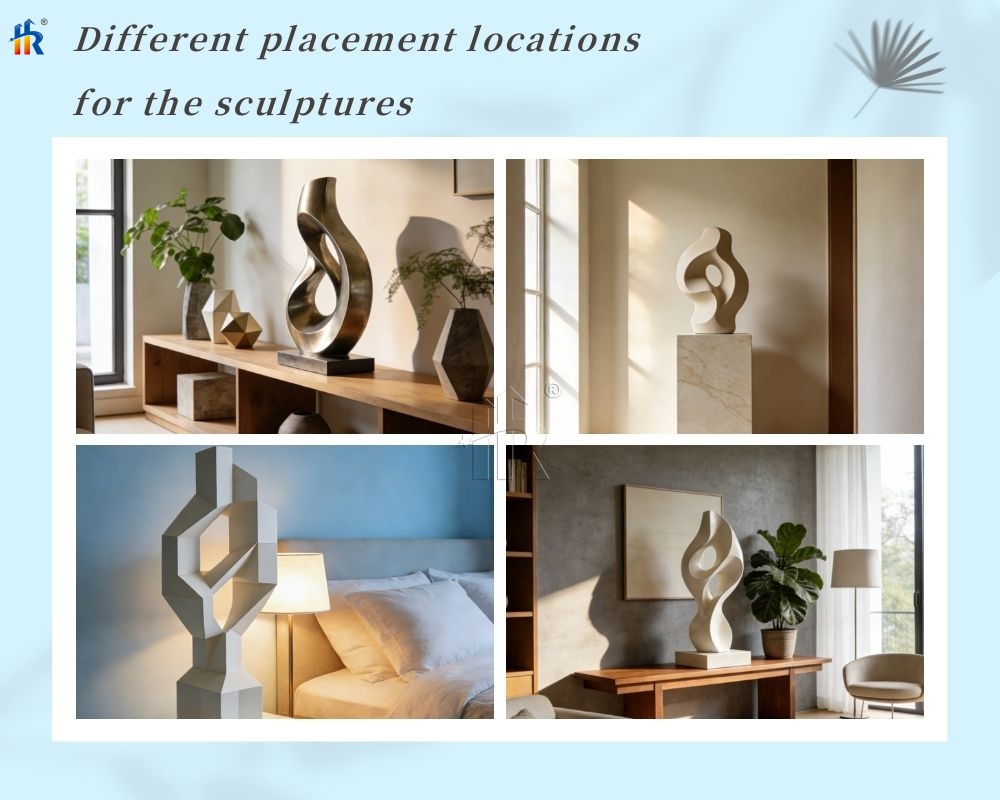 Different locations for placing the sculptures
Matching the material to the environment is key to extending the lifespan of a sculpture. Different materials have different environmental requirements, so the appropriate placement location should be chosen based on the home environment. Metal sculptures are prone to oxidation and corrosion and should be kept away from damp bathrooms and balconies, avoiding direct sunlight. They should be wiped regularly with a soft cloth and coated with protective wax. Stone sculptures, such as marble and granite, while having a substantial feel, should avoid contact with acidic cleaning agents. They should be placed in a dry and well-ventilated area, and a waterproofing agent can be sprayed annually to reduce stain penetration. Wooden sculptures are susceptible to moisture and sunlight and should be kept away from air conditioning vents and areas with direct sunlight. Walnut oil can be applied regularly to nourish the material. Resin and fiberglass sculptures should avoid high-temperature environments to prevent deformation and cracking. Only by matching the sculpture material to the environment can the artwork remain in good condition for a long time.
Proper daily maintenance and cleaning will keep sculptures looking beautiful. Daily maintenance should follow the "material compatibility" principle. Glass and ceramic sculptures can be wiped with diluted white vinegar water and then polished with a dry cloth. Metal sculptures should be gently wiped with a soft cloth dampened with alcohol or a special cleaning agent, avoiding scratching with sharp tools. Sculptures made of warm materials such as jade and agate only need to be gently wiped with a soft velvet cloth; chemical cleaning agents are not necessary. Cleaning should follow a "top-down" sequence. Wipe the top first, then clean the edges and crevices to avoid secondary contamination from dust. Regularly check the stability of the sculpture. For metal sculptures with supports, check if the welding points are secure and address any rust promptly. For stone sculptures, if cracks appear, they should be filled and repaired with color-matching epoxy resin.
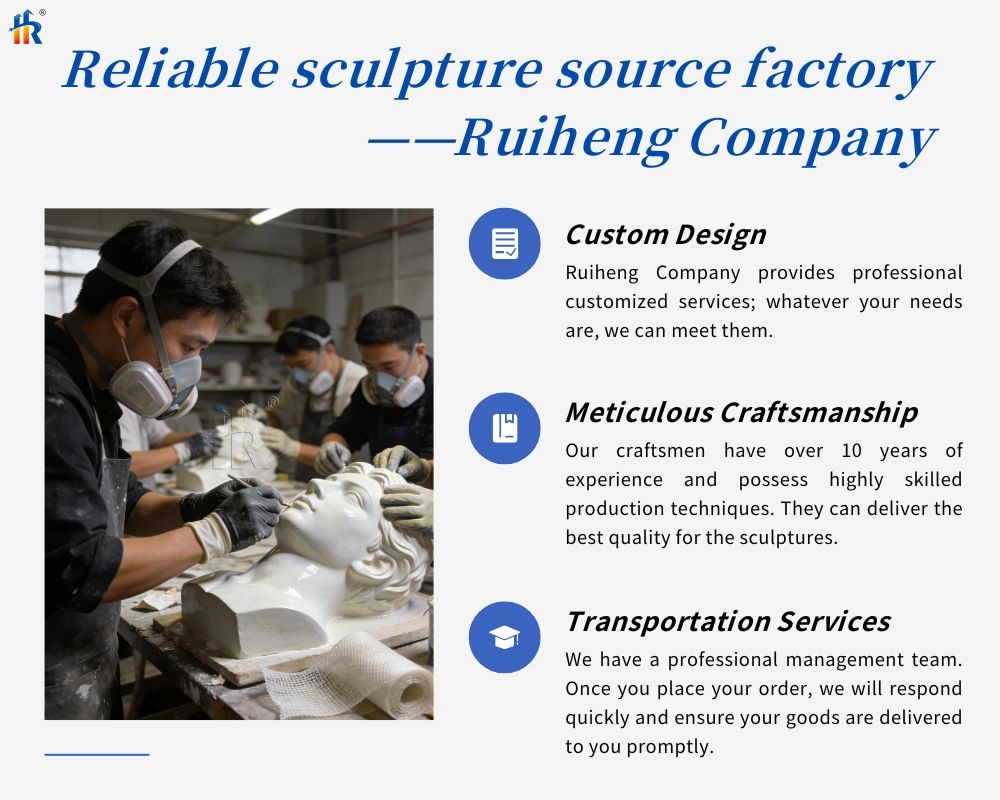 Reliable sculpture factory in China——Ruiheng Company
To seamlessly integrate sculptures into your home decor, choosing the right sculpture is crucial. As a direct manufacturer of sculptures, Ruiheng Company can meet all your home decoration needs. We can customize various artistic and practical sculptures based on your home style, space dimensions, and material preferences.
Whether it's a modern minimalist metal sculpture or a warm and colorful fiberglass sculpture, Ruiheng can create exclusive masterpieces with exquisite craftsmanship. We ensure that every sculpture perfectly complements your living space, bringing more beauty and enjoyment to your home and your life.
Please kindly leave your needs in detail. Our sales manager will contact you within 24 hours. And your contact information will be protected!
Please kindly leave your needs in detail. Our sales manager will contact you within 24 hours. And your contact information will be protected!


 +86 13418719769

 market@craftsornaments.com
 Newshang Smart Valley, Xilianhe Industrial Park, Fengtang Avenue, Shenzhen, Guangdong Province, China